One day the man with the hair was our president. The man with the hair is often our president. The man with the hair is the man with the money and the man with the money doesn’t want anything other than his money and your money and my money too because the money is all he knows. The money is his orange glow, his unwavering grimace, his flaccid arm around the waist of a woman who also belongs to him because of his money. How unfortunate it must feel to have to buy affections from humans. A thousand dollar hug. A million dollar peck on the cheek. A hundred dollar half glance across the dinner table feigning acknowledgement. There’s big money in mirroring authenticity. The man with the hair could take off his clothes and stand naked before the country and show us his anguish. One day the man with the hair was a baby. His mother held him and his father held him and his grandparents held him. And maybe they didn’t hold him just right and maybe their parents didn’t hold them just right. Be seen and not heard. There is a scar in his psoas from when he was told he couldn’t possibly do much of anything at all. Don’t be a crybaby baby. You throw like a girl. What kind of boy screams like a girl? What kind of boy are you anyway? He showed them. Look at his pearly masculine whites. The winning brute of business class action. The smoldering bully of stock market playgrounds. His forgotten muscles glisten under tailor-made suits and silk boxers pressed and perfumed by one of many assistants. Another assistant plans meals, simple breakfasts, yogurt and fruit on weekday mornings, the sheep kind, the grass fed kind because though he tells the world these things don’t matter, to his body they do. One day his body must outlive everyone else’s body. Just to be safe. But until then his body doesn’t count. Don’t look at it. Instead look at the feminine body standing next to him. This is the body he wants you to see. It’s his body. He paid for this body, all it eats and sleeps and sweats and fucks. His body is her body. His body is your body too. His body is all of the bodies he has paid for and he is on his way to paying for every body because we have sold our bodies to him and there is no return policy. His body is all bodies with the exception of his own. Which is why his body is ordered to be taken off of the internet. That body doesn’t exist. Remove it he says. If anyone sees his body they will be arrested. They will lose their citizenship. Just you wait. He will show you. The man with the hair says terrible things about other bodies so people hear him. But the man with the hair doesn’t know how to say the things he needs to say, things stuck deep inside the body he doesn’t want to exist or be seen anywhere. One day the man with the hair could sob openly in public and let the world know just how scared he is, how sorry, how sad, how confused. His tears would be the final residue of all his pent up anger, all the thoughts he has carried with him inside the body he doesn’t want to be seen. The man with the hair would be revolutionary if he did this. His tears would catch on and we would all be infected with his sadness, our own too. The drought may cease, leaving soil replenished and parched roots saturated anew. His sad tears and our sad tears would flow through us and into the earth, cooling its overheated core, which would reciprocate our affections through the timely blossoming of buds and a rejuvenation of bees and the quick-to-melt polar ice caps would stay cozy in their frozen.
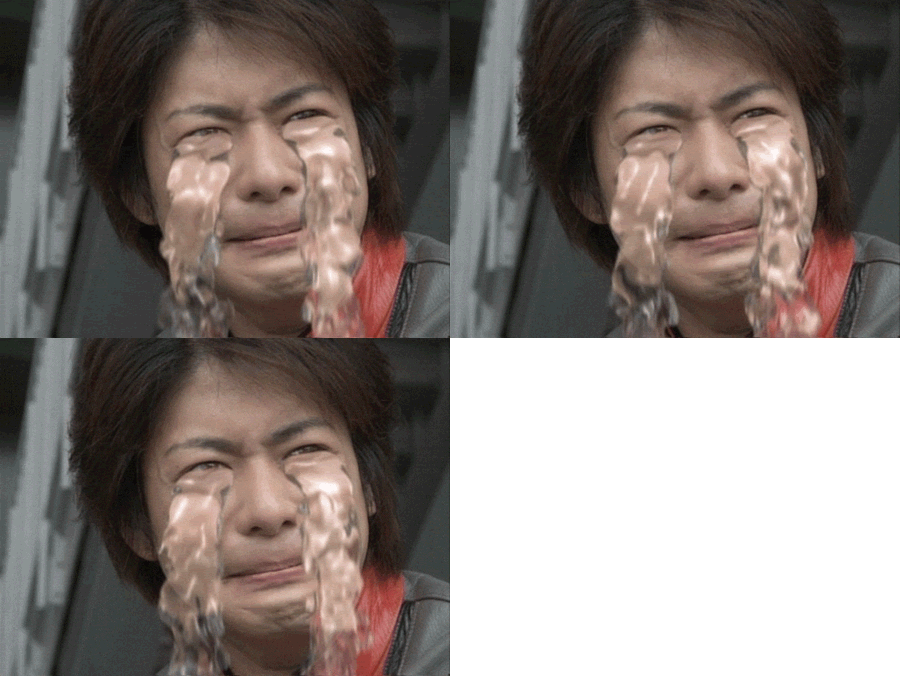
A legendary Korean actor famed for his torrential tears. His real name is not known, but in Turkey they call him “Ağlayan Adam” or Adam the crying man.