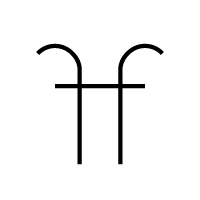

Tonight some friends and I will be having a HUNGARIAN cook-off. This is what I now know about Hungary (thanks to Wikipedia): In the earliest times Hungarian language was written in a runic-like script (although it was not used for literature purposes in the modern interpretation). The country switched to the Latin alphabet after being Christianized under the reign of Stephen I of Hungary (1000–1038).
The Rubik's Cube was invented in 1974 by Hungarian sculptor and professor of architecture Ernő Rubik.
There is a solo man's dance called Verbunkos, which evolved from the recruiting performances of the Austro-Hungarian army.
The thermal lake of Hévíz is the largest biologically active, natural thermal lake of the world. The oldest and most well-known bath of Hungary, in accordance with records from the Roman era, has a history of 2000 years.
Hungarian folk art, including dances, music, cross stitchings, embroideries, costumes, potteries, wood carvings, basket wavings, porcelains etc. has a long and rich history which play a significant role in local folk traditions and customs.
The Hungarian cuisine is a prominent feature of the Hungarian culture, just as much like the art of hospitality. Traditional dishes such as the world famous Goulash (gulyás stew or gulyás soup). Dishes are often flavoured with paprika (ground red peppers), a Hungarian innovation. Thick, heavy Hungarian sour cream called tejföl is often used to soften the dishes flavour. The famous Hungarian hot river fish soup called Fisherman's soup or halászlé is usually a rich mixture of several kinds of poached fish.
Republic of Hungary is located in the central part of the Pannonian Vale, and is a landlocked country, which is conducive to the development of all forms of traffic.